Why am I hungry after breakfast? How to stay full until lunch.
Aug 20, 2026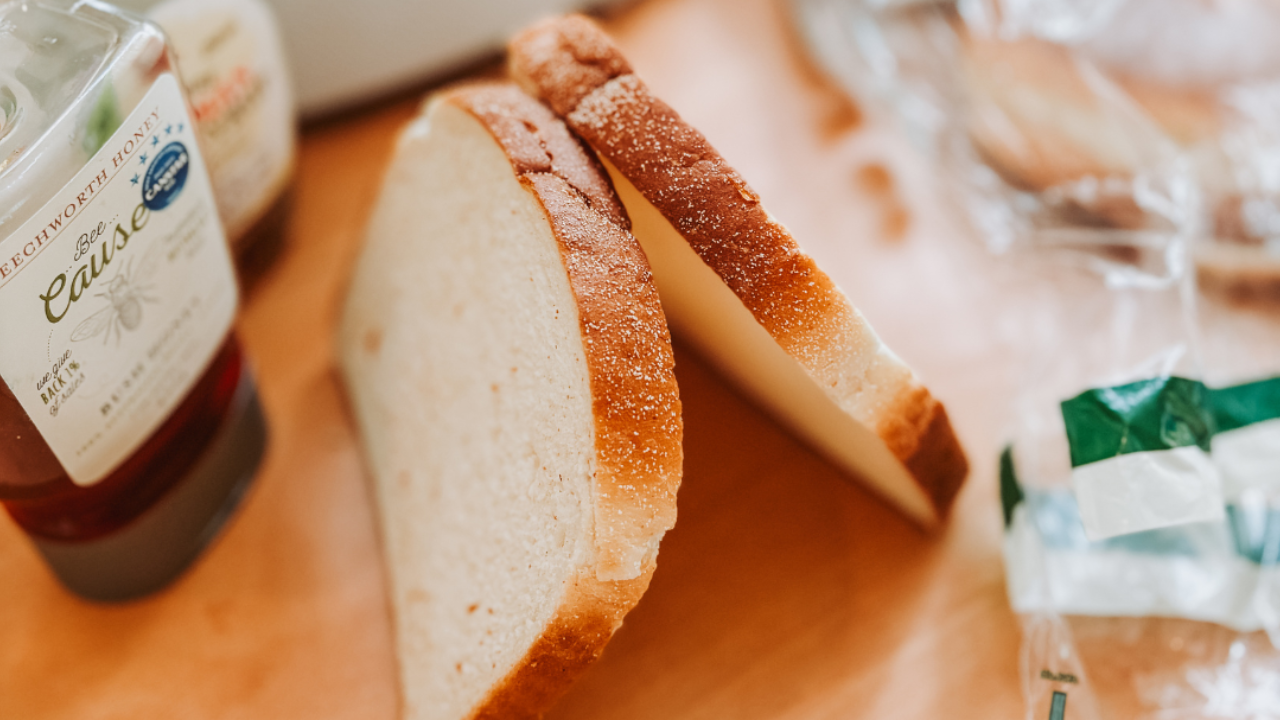
“Once I start eating, I can’t stop.” I hear this all the time.
Women tell me they can skip breakfast and cruise through the morning without thinking about food. But the minute they eat, something changes. Breakfast at 7am, another coffee at 9:30, looking for something at 10, eyeing off the biscuit jar at 10:30 and wondering whether 11am is technically close enough to lunchtime.
Eventually, they come to the conclusion that breakfast is the problem.
“I’m just better off not eating. Once I start, I can’t stop.”
But I want you to consider something very different.
What if eating breakfast isn’t making you hungry? What if it’s what you’re eating for breakfast?
1. Your “healthy” breakfast might be sabotaging you.
For decades, we’ve been given a pretty clear picture of what a healthy breakfast is supposed to look like. Cereal with milk, toast, oats topped with banana and honey, granola and yoghurt, fruit juice or a big fruit smoothie.
None of these foods need to be labelled as inherently “bad”, but many common breakfast combinations can be heavy on sugary carbohydrates while being super light on protein, fibre, fat and the things that help make a meal genuinely satisfying.
Here’s where a little science helps.
When you eat starches (aka carbs), much of it is broken down into glucose (sugar), which enters your bloodstream. Your pancreas responds by releasing insulin, a hormone that helps move sugar from your blood into your cells, where it can be used for energy or stored for later.
This is completely normal physiology. But the amount and type of carbohydrate and what you eat alongside it can influence digestion, your blood sugar response, how tight your clothes are and ultimately how satisfied you feel afterwards.
This is why I want you to stop judging breakfast purely by whether it looks “healthy”.
Ask a much more useful question:
Does this breakfast actually keep me full?
Because if you finish breakfast at 8am and you're hunting through the cupboard at 10am, something isn't working.
2. You’re not broken, you’ve been marketed to by the diet industry.
Walk down the breakfast aisle of any supermarket and look at the words on the boxes.
Wholegrain. Natural. Low fat. High fibre. Heart healthy. Made with real fruit. No added sugar.
Add some pictures of oats, berries and a happy family and it becomes very easy to believe you’re making the best possible choice for your body.
At the same time, the diet industry has spent decades telling women that the secret to losing weight is simply to eat less.
Choose the lighter option. Have the smaller portion. Skip the fat. Save your calories. Don't eat too much at breakfast.
Then 10am arrives and you're starving.
You have another coffee to try to push through it. Someone brings biscuits into the office and suddenly you're having an internal argument about whether you can have one. You eventually give in and then feel like you've somehow failed.
So you promise yourself you'll have more willpower tomorrow.
This is the cycle I want women to get out of.
If a tiny bowl of cereal leaves you hungry two hours later, I don't want you becoming better at ignoring your hunger. I want to look at what's in the bowl.
And I don't want you choosing a breakfast simply because the marketing on the packet tells you it's healthy. Turn it around. Look at the ingredients. Look at the protein. Look at the sugar and total carbohydrate. Look at the fibre.
Most importantly, look at what happens to you after you eat it.
Your hunger is information.
Your cravings are information.
Your energy crash is information.
Your pants feeling tight is information.
You don't necessarily need more discipline. You may need a better breakfast.
3. Breakfast should keep you satisfied for around four hours.
One of the simplest things I ask my clients is:
How long after breakfast are you hungry again?
Individual appetite varies, of course, but as a practical target, I like a properly built meal to comfortably carry you for around four hours.
And this is where protein becomes a game changer.
Protein is highly satiating and influences appetite-regulating signals between the gut and the brain. Fibre adds bulk and can slow digestion, while fat contributes to satisfaction and can slow how quickly food leaves the stomach.
This is the basis of what I call my Carefree Three: protein + healthy fat + fibre.
For many of my clients, I'll aim for roughly 20–30 grams of protein at breakfast, depending on their individual needs, and then add a source of healthy fat and fibre.
But I'm less interested in whether you've perfectly calculated every gram than I am in what happens next.
The real test is your morning.
You eat breakfast, get the kids organised, head to work, answer emails, see clients, go to the gym or simply get on with your day.
Then you happen to look at the clock.
It's lunchtime.
That's the goal.
No second coffee because you've hit an energy wall. No biscuit to get you through. No snack you didn't really want. No opening the pantry six times hoping something new has magically appeared.
You simply haven't been thinking about food.
That's what a good breakfast should feel like.
4. You can't eat breakfast like you did in your 20's.
There was probably a time when you could survive on toast and coffee, run out the door, stay up half the night and somehow still function the next day.
Then you hit your 40s and suddenly the rules seem to have changed.
The breakfast you ate for years doesn't keep you full anymore. Your energy isn't as forgiving. Your hormones have shifted. Weight seems easier to gain and harder to shift. You may notice more around your waist. Sleep can become unpredictable and your body doesn't always bounce back the way it once did.
There are genuine physiological reasons why nutrition deserves more attention as we get older.
Muscle mass naturally tends to decline with age unless we're actively working to maintain it. Hormonal changes through perimenopause and menopause can influence body composition, sleep and fat distribution. Lifestyle can change too, more stress, less sleep, busy careers, children and less incidental movement.
This makes maintaining muscle particularly important, and adequate protein is part of that picture.
It's one reason I want women in their 40s and beyond thinking more about blood sugar, not simply trying to survive on less food.
Your body has changed.
That doesn't mean there's something wrong with it.
It means the way you feed it may need to change too.
You don't necessarily get to eat like you're 22 forever and expect your 42-year-old body to respond exactly the same way.
5. Breakfast can be your biggest game changer and it's where I start with every client.
When a new client comes to see me wanting to lose weight, get her energy back, reduce cravings and finally feel in control around food, I don't hand her an enormous list of things she's doing wrong.
I start with breakfast.
Because breakfast gives us an opportunity to change the direction of the entire morning and therefore the entire day.
Instead of trying to eat as little as possible, we build a meal designed to satisfy.
Protein. Healthy fat. Fibre.
There is no rule saying breakfast has to look like breakfast.
It just has to do its job.
And when we get that first meal right, something interesting often happens.
The morning becomes easier.
You're not thinking about food constantly. You're not reaching for another coffee because your energy has disappeared. You're not trying to resist the biscuit jar. You're not arriving at lunch absolutely ravenous.
And that is why I believe breakfast can be one of the biggest game changers you make.
Not because breakfast is magical.
But because one good decision can make the next decision easier.
So tomorrow morning, don't try to overhaul your entire diet.
Just look at your breakfast and ask:
Where's my protein? Where's my healthy fat? Where's my fibre?
Then eat it and pay attention.
How is your energy?
How are your cravings?
And most importantly, what time do you start thinking about food again?
Because breakfast shouldn't make you hungry.
The goal is to look up and realise it's lunchtime, no second coffee, no biscuit and no hunting through the cupboard.
And if you're wondering exactly what that kind of breakfast looks like, I've put the first changes I make with my clients into my free Breakfast Blueprint.
👉Get your free Breakfast Blueprint here and start with the meal that can change the direction of your entire day (and the size of your wardrobe).